
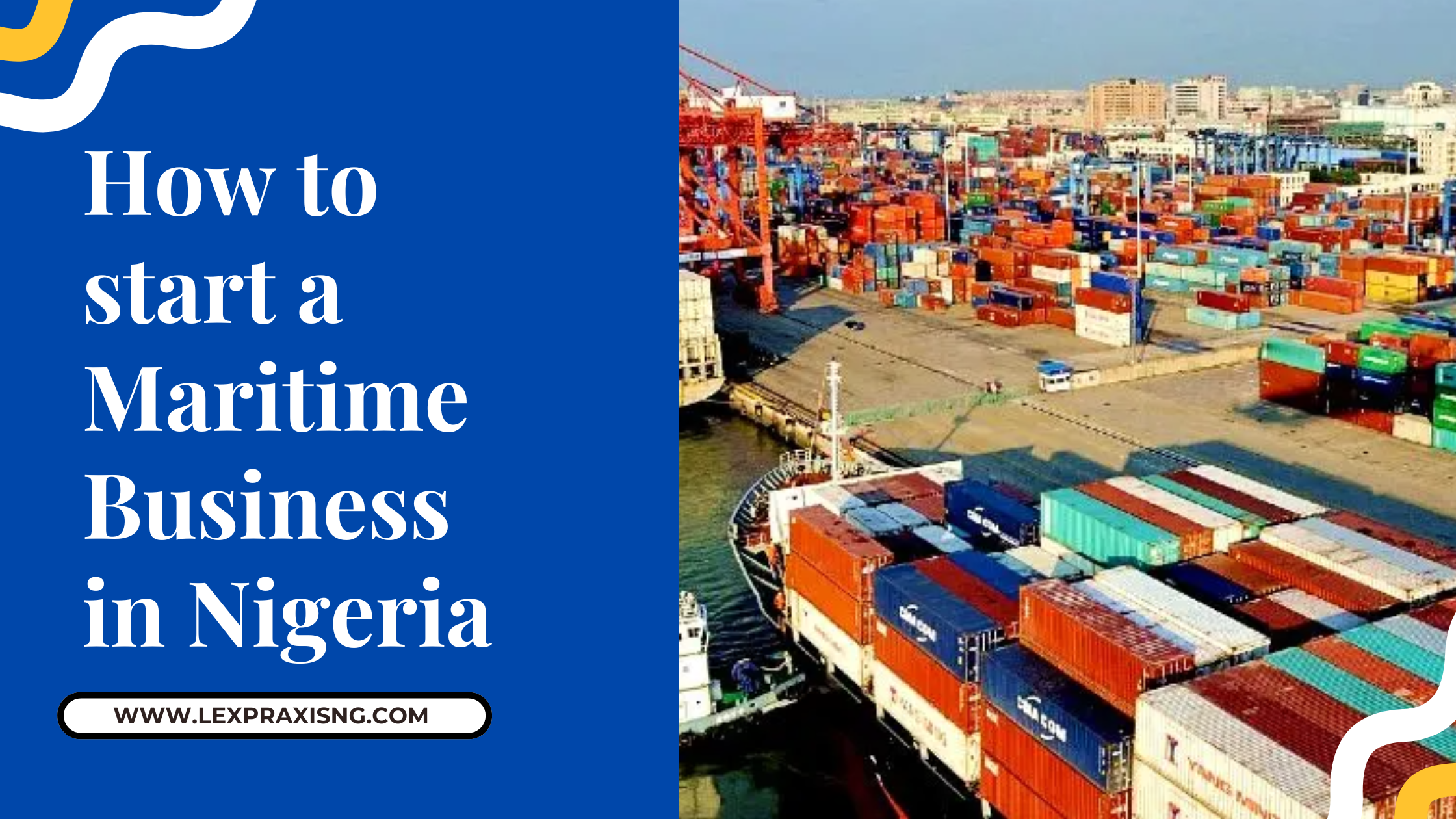
Maritime business is widely regarded as an international enterprise because it enables countries to buy goods and services from other countries. Also, it allows them to sell their own across borders. It serves as a bridge between countries, facilitating mutually beneficial business arrangements. Essentially, there are various ways to engage in maritime business. For example, owning, chartering, or operating vessels to transport passengers or cargo by sea are common methods.
However, in Nigeria, the maritime business is regulated by national and international laws and regulations. These laws are designed to protect the environment, while others protect the lives of passengers and cargo drivers. That is why maritime businesses need to adhere to these laws and regulations. In addition, the law requires that anyone intending to start a maritime business must obtain a license from the relevant government authorities. This is necessary to avoid interruptions in the course of business operations.
In this article, we will discuss what maritime business is, different areas of maritime business, and how to start a maritime business in Nigeria.
WHAT IS MARITIME BUSINESS?
Maritime business is a business that is carried out through the use of water transportation. It is a business that involves the activities on the ocean and seas. It also involves moving people and goods from one country to another. Furthermore, it also involves using ships or boats to transport passengers. This can include fishing or other services related to shipping, such as logistics and port operations.
The Nigerian Maritime Business is regulated by the Nigerian Maritime Administration and Safety Agency (NIMASA) Act 2007, which ensures the promotion of maritime safety and security and safeguards the maritime environment. It also regulates shipping registration and commercial shipping, maritime labour, and the establishment of the Nigerian Maritime Administration and Safety Agency. Other matters connected therewith are included.[1] The aim is to establish domestic commercial shipping for international and shipping enterprises.
KEY AREAS OF MARITIME BUSINESS
The maritime industry is very broad and encompasses various roles such as:
Charters and Brokers,
Marine Insurers
Logistics Operators
Ship & Crew Managers
Ship Operators
Vessel Inspectors and Auditor
Port Managers, Terminal Operators
Commercial Managers
Port and Ships agents,
Lawyers, Supply Chain Managers,
Freight Forwarders,
Marine Analysts and so forth.
Maritime business is not confined to a typical 9-to-5 schedule; it operates around the clock, following global time zones. It is a dynamic and demanding industry where each day brings new challenges and experiences in an ever-evolving global environment.
HOW TO START A MARITIME BUSINESS IN NIGERIA: KEY REQUIREMENTS
One of the major activities in the maritime business is shipping. In Nigeria, before a person or company can start a shipping business, there are key requirements. These must be fulfilled before engaging in such an operation.
- Registration of the Business: The law provides that the business must be registered with the Corporate Affairs Commission with a minimum share capital of 25 million as mandated by the Corporate Affairs Commission.
- NIMSA Registration: Obtain registration as a shipping company or agent. The core requirements for obtaining a certificate include:
- Completed NIMASA form B1.
- Certificate of Incorporation and Memorandum and Articles of Association.
- Evidence of allotment of Shares
- Particulars of Directors
- Tax Clearance Certificate valid for 3 years
- Evidence of filing Annual Returns
- Original Bank Reference Letter
- Vessel Registration: This is required where the vessel is owned by the company itself. The vessel or boat must be registered with the Nigerian Ship Registry.
- Obtain Nigerian Port Authority (NPA) Licensing
- Registration must comply with the Relevant Authority, such as the Special Control Unit against Money Laundering (SCUML). The Economic Financial Crime Commission instructed that all maritime companies must register with SCUML for the purpose of opening and operating a corporate account for business operations.
- Tax Registration with the Nigeria Revenue Service
- Cabotage Compliance: Ensure compliance with the Coastal and Inland Shipping (Cabotage) Act 2003, which requires 60% Nigerian ownership for certain operations.
CONCLUSION
To operate in Nigeria’s maritime industry, a company must register with the Nigerian Maritime Administration and Safety Agency (NIMASA) and submit all required documentation. This registration ensures compliance with regulatory standards and authorizes the company to legally carry out shipping operations.
For enquiries, you may reach out to us through the live chat icons on either side of this page or send an email by using this link, and we’ll respond to you.
[1] Section 1 and Section 22 of the NIMASA Act 2007.
