
Introduction
The rapid evolution of virtual assets and blockchain technology has fundamentally transformed the global financial ecosystem. This transformation has prompted a Presidential executive order on virtual assets coordination 2026 to address emerging concerns and foster regulatory clarity. Cryptocurrencies such as Bitcoin and Ethereum, alongside other virtual assets, have created new opportunities for investment, cross-border payments, tokenisation and financial innovation. Their increasing adoption has, however, presented significant regulatory challenges relating to investor protection, financial stability, anti-money laundering (AML), combating the financing of terrorism (CFT), taxation and market integrity.
Nigeria has emerged as one of the world’s leading markets for cryptocurrency adoption despite an initially restrictive regulatory environment. While the Central Bank of Nigeria (CBN) prohibited banks and other financial institutions from facilitating cryptocurrency transactions in 2021, the Securities and Exchange Commission (SEC) continued to develop a regulatory framework recognising digital assets as securities where they satisfy the characteristics of investment contracts. The enactment of the Investments and Securities Act, 2025 further strengthened the legal foundation for regulating virtual assets by expressly recognising them within Nigeria’s capital market regulatory framework.
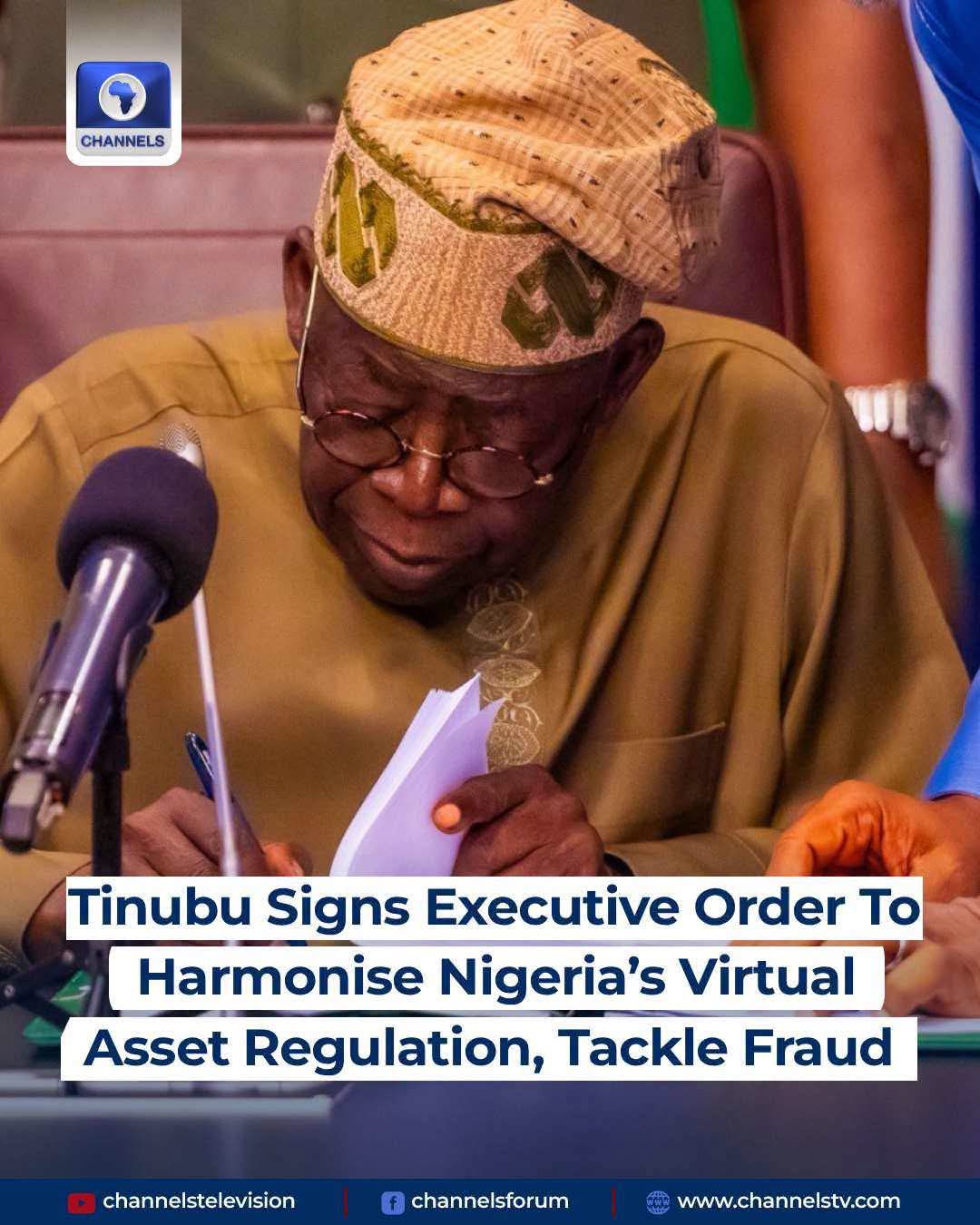
Against this backdrop, President Bola Ahmed Tinubu, on 17 July 2026, signed the Presidential Executive Order on Virtual Assets Coordination,. The Executive Order seeks to improve regulatory coordination among relevant government agencies and establish a unified approach to the regulation of virtual assets in Nigeria. Rather than creating new substantive rights or replacing existing legislation, the Order is primarily intended to harmonise regulatory oversight, eliminate institutional overlaps and foster innovation while maintaining effective consumer protection and financial system integrity.
This article examines the legal effect of the Executive Order, its principal provisions and its implications for existing regulations, regulatory authorities, existing operators and prospective entrants into Nigeria’s virtual asset industry.
The Legal Effect of an Executive Order in Nigeria
An Executive Order is a formal directive issued by the President in the exercise of the executive powers vested in him under the Constitution. It serves as an administrative instrument through which the President directs government ministries, departments and agencies on the implementation of existing laws and government policies.
Section 5(1)(a) of the Constitution of the Federal Republic of Nigeria 1999 (as amended) vests the executive powers of the Federation in the President and authorises him to exercise those powers either directly or through officers of the executive branch.² Consequently, Executive Orders derive their legal validity from constitutional executive authority rather than legislative enactment.
However, Executive Orders do not possess the same legal status as Acts of the National Assembly. While they are legally binding upon government agencies and public officers to whom they are directed, they cannot amend, repeal or override any existing statute enacted by the National Assembly. Where an Executive Order conflicts with an Act of the National Assembly or any provision of the Constitution, the Constitution and the statute prevail to the extent of the inconsistency.
Accordingly, the Presidential Executive Order on Virtual Assets Coordination 2026, does not create a new regulatory regime for virtual assets. Rather, it facilitates coordination among existing regulators to ensure more effective implementation of already existing statutory responsibilities.
In practical terms, the Executive Order serves as an administrative coordination mechanism rather than a legislative instrument introducing new substantive legal obligations.
Key Highlights of the Presidential Executive Order 2026
One of the most significant features of the Executive Order is the establishment of a coordinated institutional framework for the regulation of virtual assets within Nigeria.
The Order seeks to eliminate fragmented regulatory oversight by encouraging collaboration among key government institutions responsible for financial regulation, taxation, anti-money laundering enforcement and investor protection.
Among its notable provisions are:
- establishment of a national framework for coordinated regulation of virtual assets;
- creation of an inter-agency coordination mechanism to facilitate information sharing and regulatory cooperation;
- promotion of innovation within Nigeria’s digital economy while ensuring adequate investor and consumer protection;
- strengthening compliance with anti-money laundering and counter-terrorism financing obligations;
- enhancement of tax administration relating to virtual asset transactions;
- encouragement of responsible development of blockchain technology and digital financial services; and
- reduction of regulatory duplication and institutional conflicts among government agencies.³
The Executive Order therefore focuses primarily on institutional efficiency rather than introducing additional licensing requirements or creating entirely new regulatory obligations.
Implications of the Executive Order on Existing Regulations
The Executive Order does not repeal or amend any existing legislation governing virtual assets in Nigeria. Instead, it operates alongside the existing legal framework by facilitating cooperation among regulatory institutions charged with administering applicable laws.
The principal legislation governing virtual assets in Nigeria remains the Investments and Securities Act, 2025 (“ISA 2025”), which recognises virtual assets as securities where they fall within the statutory definition of securities and places their regulation under the oversight of the Securities and Exchange Commission (SEC).4 Consequently, the Executive Order neither diminishes nor enlarges the statutory powers already conferred on the SEC under the Act.
Similarly, the regulatory responsibilities of the Central Bank of Nigeria (CBN) under the Central Bank of Nigeria Act, 2007 and the Banks and Other Financial Institutions Act, 2020 (BOFIA) remain unaffected. The CBN retains responsibility for monetary policy, payment systems oversight and the regulation of financial institutions under its supervisory jurisdiction.5
The Executive Order therefore functions as an administrative mechanism for ensuring that existing laws are implemented in a coordinated and consistent manner. It neither creates new offences nor imposes additional licensing requirements beyond those already provided under existing legislation and subsidiary regulations.
Implications on Regulatory Authorities
Before the issuance of the Executive Order, Nigeria’s regulation of virtual assets involved several agencies exercising separate statutory mandates. This often resulted in overlapping responsibilities, regulatory uncertainty, and fragmented supervision.
The Executive Order seeks to address these concerns by promoting institutional collaboration among relevant regulators, including the SEC, the CBN, the Nigerian Financial Intelligence Unit (NFIU), the Nigerian Revenue Service (formerly the Federal Inland Revenue Service), the Economic and Financial Crimes Commission (EFCC), the Corporate Affairs Commission (CAC) and other relevant government agencies.6
The coordinated framework is expected to improve information sharing, reduce regulatory duplication, facilitate unified policy formulation and strengthen regulatory enforcement across the virtual asset ecosystem.
Nevertheless, each regulator continues to exercise only those powers conferred upon it by its enabling statute. The Executive Order does not transfer statutory functions from one agency to another nor create concurrent jurisdiction where none previously existed.
Implications for Existing Virtual Asset Service Providers
For existing Virtual Asset Service Providers (VASPs), cryptocurrency exchanges, token issuers, digital asset custodians and other market participants, the Executive Order signals increased regulatory coordination rather than a complete change in compliance obligations.
Operators should expect greater cooperation among regulatory agencies in areas such as licensing, compliance monitoring, anti-money laundering enforcement, consumer protection and taxation. Consequently, regulatory information submitted to one agency may increasingly be shared with other competent authorities where permitted by law.
Existing operators are also likely to experience greater regulatory certainty as coordinated oversight reduces inconsistencies arising from multiple regulators issuing divergent regulatory expectations.
However, compliance obligations under the Investments and Securities Act, SEC Rules, AML/CFT regulations, tax laws and other applicable legislation remain fully applicable.
Implications for New Startups
For startups seeking to establish businesses within Nigeria’s virtual asset industry, the Executive Order presents both opportunities and increased compliance expectations.
From an investment perspective, coordinated regulation is capable of improving investor confidence by providing greater certainty regarding the applicable regulatory framework. This may encourage domestic and foreign investment into blockchain technology, tokenisation platforms, fintech innovation and digital asset infrastructure.
On the other hand, startups should anticipate stricter regulatory scrutiny from inception. Businesses intending to operate within the virtual asset ecosystem will need to understand the respective regulatory expectations of the SEC, CBN, tax authorities and AML regulators before commencing operations.
The Executive Order therefore reinforces the importance of obtaining appropriate legal and regulatory advice at the early stages of business development to ensure compliance with applicable laws.
Legal Analysis
From a legal standpoint, the significance of the Executive Order lies more in administrative coordination than legislative innovation.
The Order does not constitute an independent source of substantive regulation for virtual assets. Instead, it provides an institutional framework through which existing regulators may better discharge their statutory responsibilities.
This distinction is particularly important because the Nigerian constitutional system is founded upon the doctrine of separation of powers. Legislative authority resides in the National Assembly, while executive authority resides in the President.7 Consequently, although the President may issue Executive Orders for the effective administration of government, such Orders cannot substitute for legislation enacted by Parliament.
Accordingly, where any provision of the Executive Order appears inconsistent with the Constitution or an Act of the National Assembly, the latter prevails.
The practical success of the Executive Order will therefore depend less on its legal status and more on the willingness of regulatory institutions to cooperate effectively, avoid jurisdictional conflicts and implement harmonised policies capable of promoting innovation while protecting investors and preserving financial stability.
Conclusion
The Presidential Executive Order on Virtual Assets Coordination, 2026 represents another significant step in the evolution of Nigeria’s regulatory framework for virtual assets and blockchain technology. Rather than introducing a new legal regime, the Order seeks to improve collaboration among government institutions whose statutory mandates intersect within the virtual asset ecosystem.8
From a legal perspective, the Executive Order derives its authority from the executive powers vested in the President under section 5 of the Constitution of the Federal Republic of Nigeria 1999 (as amended). While it is binding on government agencies and officials responsible for its implementation, it does not possess the same legal status as an Act of the National Assembly and cannot amend, repeal or supersede existing legislation. Accordingly, the Investments and Securities Act, 2025, together with other applicable statutes and subsidiary regulations, remains the principal legal framework governing virtual assets in Nigeria.9
For regulators, the Order is expected to enhance institutional cooperation, minimise regulatory overlaps and facilitate a more coherent approach to policy implementation and enforcement. For existing operators, it provides greater regulatory certainty through improved inter-agency coordination while preserving existing licensing and compliance obligations. Likewise, startups intending to venture into the virtual asset industry stand to benefit from a more predictable regulatory environment, although they must continue to comply with all applicable statutory and regulatory requirements.10
Ultimately, the effectiveness of the Executive Order will depend not merely on its issuance but on its practical implementation. Continuous collaboration among regulatory agencies, timely issuance of implementation guidelines and sustained stakeholder engagement will be critical to achieving the Order’s objectives. If effectively implemented, the Executive Order has the potential to strengthen investor confidence, encourage responsible innovation, improve regulatory efficiency and further position Nigeria as a leading hub for digital assets and financial technology in Africa.11
For enquiries, you may contact us on through either of the live chat icons on this page or by filling the contact information using this link, and we’ll respond to you.
Footnotes
- State House, President Tinubu Signs Executive Order on Virtual Assets, Establishes Council to Harmonise Regulation of Digital Economy (17 July 2026).
- Constitution of the Federal Republic of Nigeria 1999 (as amended), s 5(1)(a).
- Presidential Executive Order on Virtual Assets Coordination, 2026.
- Investments and Securities Act, 2025.
- Central Bank of Nigeria Act, 2007; Banks and Other Financial Institutions Act, 2020.
- Presidential Executive Order on Virtual Assets Coordination, 2026.
- Constitution of the Federal Republic of Nigeria 1999 (as amended), ss 4, 5 and 6.
- Constitution of the Federal Republic of Nigeria 1999 (as amended), s 5.
- Investments and Securities Act, 2025.
- Presidential Executive Order on Virtual Assets Coordination, 2026.
- State House, President Tinubu Signs Executive Order on Virtual Assets, Establishes Council to Harmonise Regulation of Digital Economy (17 July 2026).
